
Farmer Mental Health

Stronger Together: People, Animals & Communities

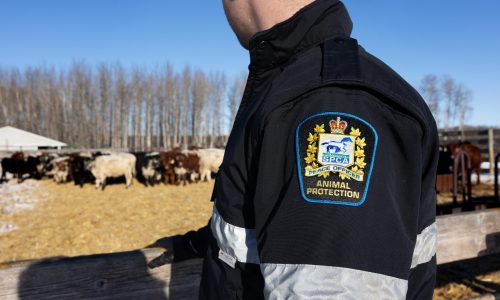
The Alberta SPCA responds to concerns of animals in distress across Alberta, including on farms and rural properties. When responding to these calls, peace officers noted that in some of these cases animal caretakers appeared stressed or unwell — signs that can be connected to challenges in caring for animals. Research shows farmers face higher mental health risks than the general population, and that animal welfare and human well-being often go hand in hand. However, there was no existing training and few resources for peace officers to access in these cases.
PeaceOfficer_Winter_19

 A One Health Approach

To address this issue, the Alberta SPCA teamed up with agwellAB’s lead researcher, Dr. Rebecca Purc-Stephenson. Through investigating peace officers’ field experience, Dr. Purc-Stephenson identified early, observable signs related to the property, animals, and their caretakers that may signal emerging welfare concerns.

Project Outcomes
Through this project, we were able to develop:

  • The Wellness & Safety Indicators Tool for peace officers to use during investigations.
  • Training to support rural mental health literacy, communication strategies and use of the tool Wellness & Safety Indicators Tool.
  • Strengthened referral pathways so animal caretakers can access help earlier.

By supporting farmers, we are helping to drive our mission to protect, promote and enhance the well-being of animals across Alberta.

Financial support has been provided under the Sustainable Canadian Agricultural Partnership, a five-year, $3.5-billion investment by Canada’s federal, provincial and territorial governments that supports Canada’s agri-food and agri-product sectors.

To learn more about the project, download the summary report (January 2026).

Scroll to Top
Abused or neglected animal

Under the Animal Protection Act, peace officers have authority to investigate concerns of animal abuse or neglect if there is reason to believe that an animal is:

(a) deprived of adequate shelter, ventilation, space, food, water or veterinary care or reasonable protection from injurious heat or cold,
(b) injured, sick, in pain or suffering, or
(c) abused or subjected to undue hardship, privation or neglect.

Does your concern meet these requirements?

Animal that is in immediate danger
Who to call

In Edmonton:
311
Edmonton Animal Care & Control Centre

In Calgary:
403-205-4455
Calgary Humane Society

On a First Nation or Reserve:
Contact Band leadership or the RCMP

Outside Calgary, Edmonton, or First Nations:
1-800-455-9003 or complete online
Alberta SPCA

What you need when you call:
Address, details (must be firsthand), date and time, description of owner and animals

What next

If your concern is regarding intentional cruelty to
an animal, contact your local police or RCMP. If the
animal is in immediate danger, call 911.

If not, start again.

Abandoned animal

Stray animals and abandoned animals are different.
An abandoned animal has been intentionally left behind by their owner or caretaker, without proper care or intention to return.

A stray animal may or may not have an owner or caretaker, and is wandering at large (off the owner or caretaker’s property).

Wildlife

Contact a wildlife organization near you.

Who to call

In Edmonton:
311
Edmonton Animal Care & Control Centre

In Calgary:
403-205-4455
Calgary Humane Society

Outside Calgary and Edmonton:
1-800-455-9003
Alberta SPCA or complete online

Is the stray animal injured?
Who to call

Companion Animals
In Edmonton:
311
Edmonton Animal Care & Control Centre

In Calgary:
311
Calgary Animal Services

Outside Calgary and Edmonton: 
Contact municipal enforcement / bylaw office

Livestock
Contact Livestock Identification Services at 1-866-509-2088.
After hours, contact your local non-emergency police line

Short-term pet care during crisis

Review our materials

Surrendering an animal

Contact your local animal shelter.